
Join our newsletter
In most practices, a treatment plan and the schedule are two separate things. A provider builds the plan, decides what should happen and in what order, and then that information has to travel, usually by way of a conversation at the front desk, before any of it reaches the calendar. It works, but it depends on memory, timing, and a handoff that happens dozens of times a day.
Archy is built so the plan and the schedule are the same thing. The result is a dental treatment planning solution where what a provider decides in the operatory is immediately something the front desk can act on, with fee estimates that stay accurate the entire way through.
Plan treatment in the order it will actually happen
A treatment plan is more useful when it reflects how care is actually delivered, which is in a sequence of visits rather than a single list of everything a patient needs.
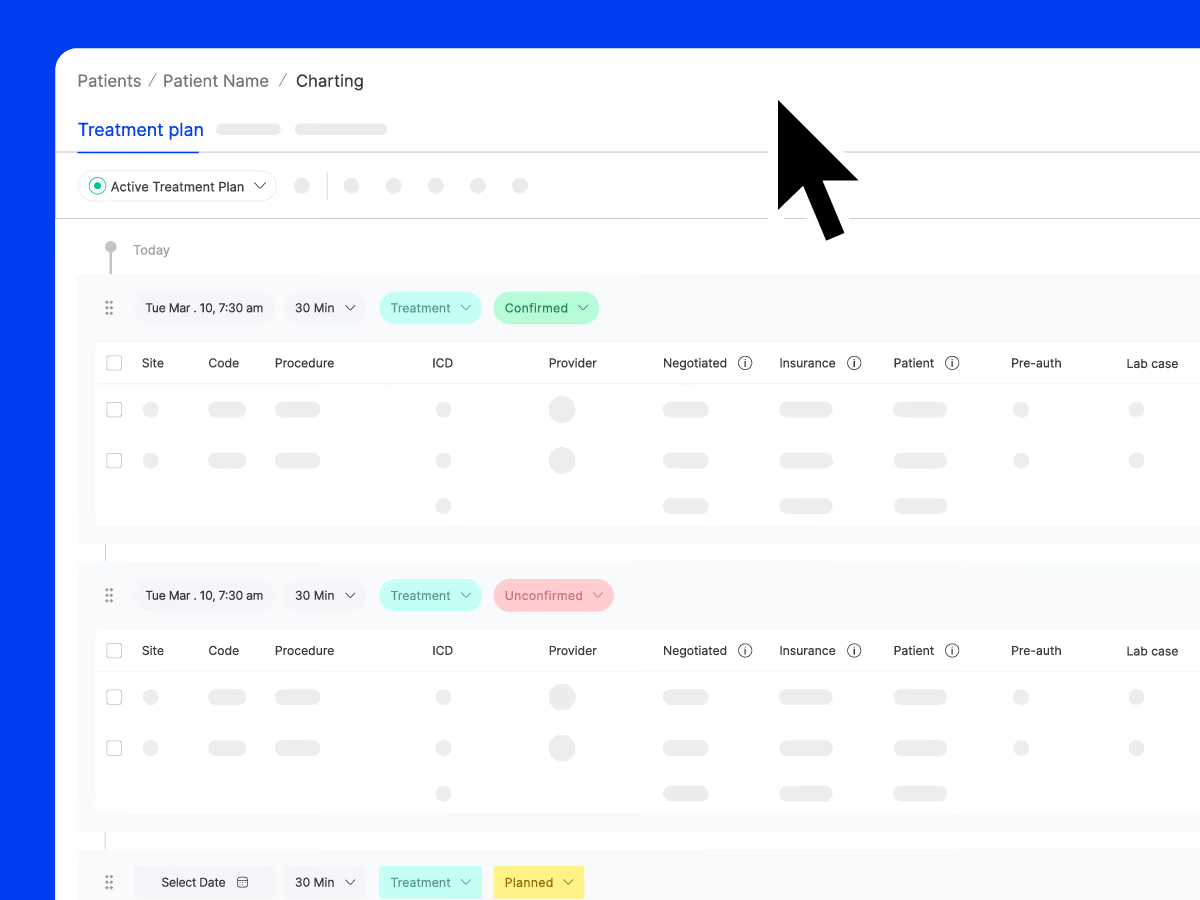
In Archy, procedures are grouped into the appointments they will be done in, and those appointments are arranged in the order the treatment should happen. The plan becomes a clear timeline of a patient's care, and the sequence the provider has in mind is captured in the plan itself instead of living only in their head.
Give patients fee estimates that hold up
Because procedures are grouped into appointments, Archy calculates fees in the order those appointments are stacked, regardless of their status. The estimate a patient receives reflects the real order their care will be delivered in.
That matters in a common situation: a patient already has an appointment scheduled, but a provider is planning treatment that should be done before it. Archy accounts for that ordering automatically, and fees recalculate on their own as the plan changes. The number a patient hears is accurate the first time, without needing to be revised later.
Present options before anyone commits
A patient often has more than one path forward, and how a provider presents a dental treatment plan can shape whether a patient moves ahead at all. Archy makes it possible to lay those options out without ever creating confusion about which plan is real.
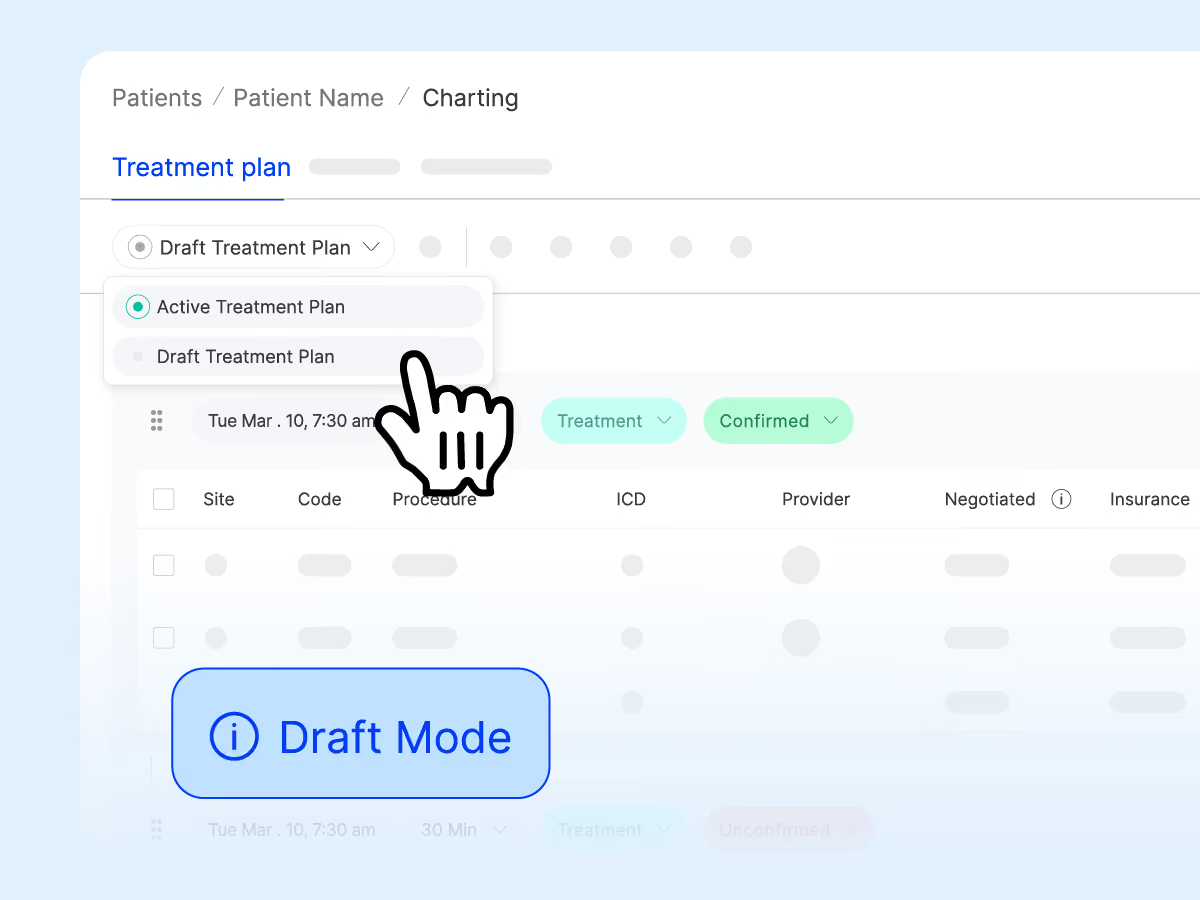
There is always one Active treatment plan, and it serves as the single source of truth. Everything else is a Draft. A provider can build a Draft to show a patient an alternative approach or a worst-case scenario, present it, and leave the Active plan untouched until a decision is made. Activating a Draft replaces the Active plan and archives the previous one automatically. Because Drafts include currently scheduled work by default, the estimates on every option stay accurate while the patient is still weighing the choice.
Hand the front desk a plan they can schedule from directly
Since the plan and the schedule stay in sync, scheduling staff work straight from the active treatment plan. They can see at a glance which appointments are ready to schedule and pull the correct procedures onto an appointment with one click, without needing the provider to explain what comes next.
The connection runs both ways. If a provider changes the treatment included in today's appointment from the treatment plan, the real schedule updates immediately. Likewise, changes made on the schedule are reflected back in the treatment plan. If an appointment is marked as a no-show, its procedures automatically return to planned status, ready to be rebooked. The plan and the schedule stay aligned because they are not separate systems to begin with.
Keep the chart complete while the plan stays focused
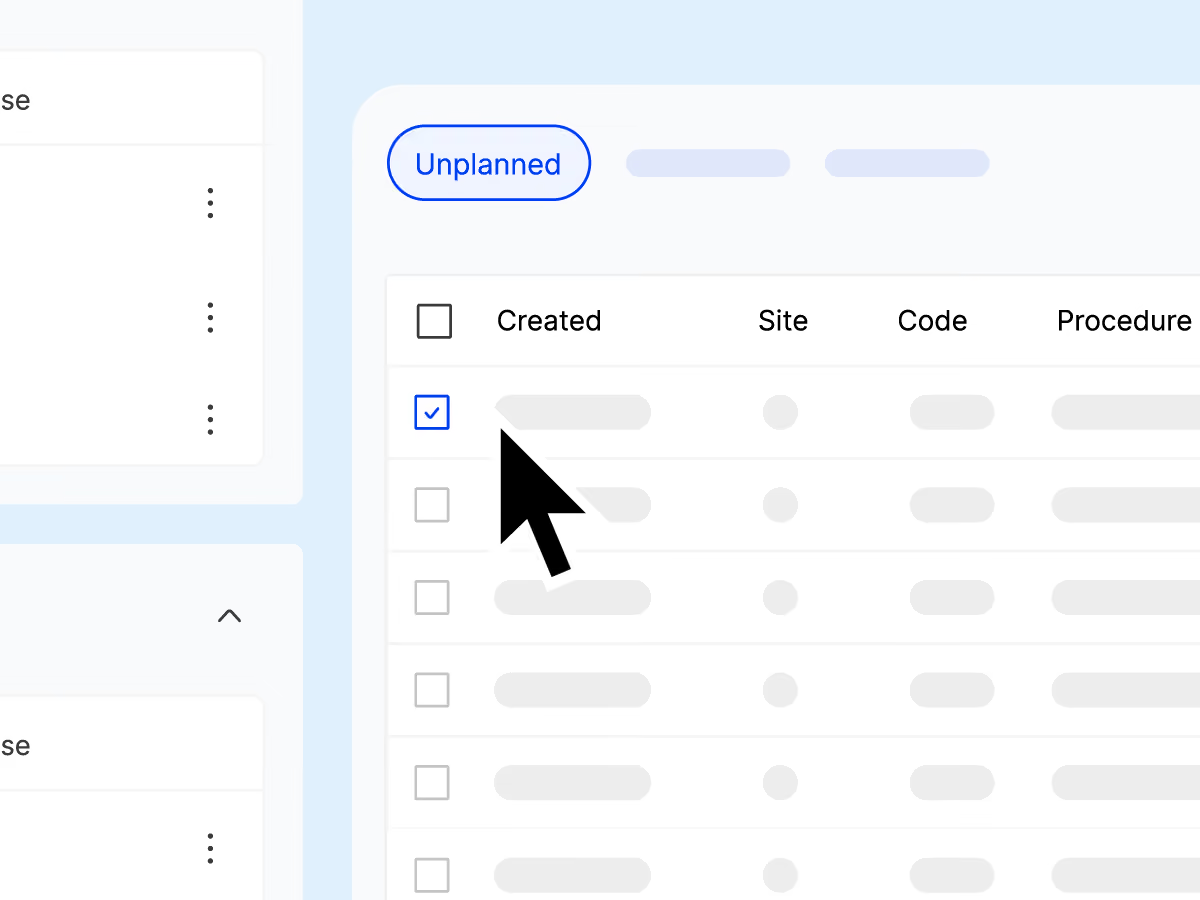
Every procedure in Archy carries a status: Unplanned, Planned, Scheduled, Referred, Existing Other, Existing Current, Rejected, or Completed.
The distinction between Unplanned and Planned is a useful one. The chart holds everything that has been diagnosed, while the Active plan holds only what a provider is currently presenting to the patient. Nothing gets lost from the record, and nothing unnecessary clutters the conversation happening today. Referred work can also be presented to the patient as part of their care rather than being reduced to a static flag.
Charting, planning, estimating, and scheduling in one workflow
Brought together, this is a single connected workflow built around one Active plan. A provider plans treatment in the order it will be delivered. The patient sees their options alongside fee estimates that hold up. The front desk schedules the right procedures the moment a patient accepts, working directly from the plan rather than from a verbal handoff.
Accepted treatment is where production comes from, and increasing case acceptance comes down to reducing the friction between deciding on care and getting it onto the schedule. That is what it looks like when treatment planning and scheduling finally work together in one practice management software.